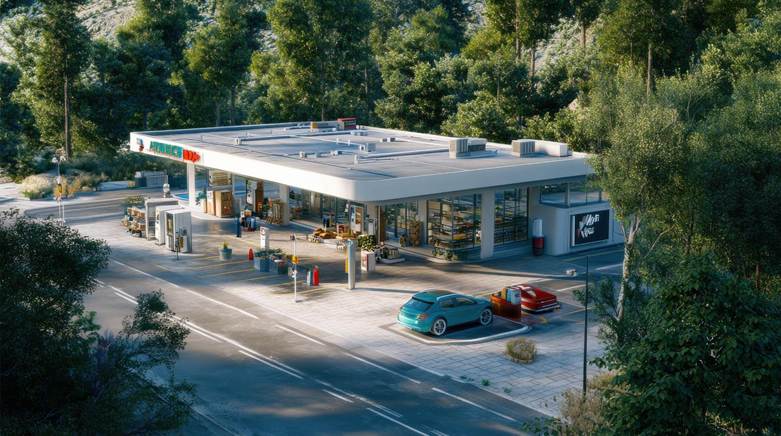
As the fuel retail industry continues to evolve, Nicholas Kambitsis explores how sustainable gas station design is helping operators prepare for the future through smarter construction, greater operational efficiency, and long-term investment planning. Modern stations are increasingly being designed to reduce resource consumption, improve customer experiences, and create flexible facilities that can adapt as technology, transportation, and consumer expectations continue to change.
Today’s gas stations serve far more than motorists stopping to refuel. Many locations function as convenience retail destinations, foodservice providers, parcel pickup points, and community gathering spaces. As these responsibilities expand, thoughtful facility design has become an important part of supporting operational performance while preparing businesses for future growth.
Sustainability Begins with Smart Design
Sustainable design extends beyond environmental considerations. For fuel retailers, it often means creating facilities that operate efficiently, reduce unnecessary costs, and remain functional for decades.
Effective planning may include:
- Durable building materials
- Flexible interior layouts
- Efficient traffic flow
- Long-lasting infrastructure
- Low-maintenance landscaping
These decisions help reduce operating expenses while creating facilities that can accommodate future upgrades more easily.
Energy Efficiency Supports Long-Term Operations
Energy consumption represents a significant operating expense for many retail locations. Incorporating energy-efficient systems during construction or renovation can improve both sustainability and financial performance.
Common improvements include:
- LED lighting throughout the property
- Smart lighting controls
- High-efficiency HVAC systems
- Energy-efficient refrigeration equipment
- Improved building insulation
These upgrades often reduce utility costs while providing comfortable environments for customers and employees.
Water Conservation Matters
Many gas stations use substantial amounts of water for landscaping, restroom facilities, and car wash operations. Incorporating water-saving technologies helps reduce consumption without affecting customer service.
Potential solutions include:
- Low-flow plumbing fixtures
- Drought-tolerant landscaping
- Smart irrigation systems
- Rainwater collection where appropriate
- Water-efficient car wash equipment
These practices support responsible resource management while lowering long-term operating costs.
Designing for Changing Vehicle Technology
The transportation industry continues to evolve, requiring retail facilities to remain adaptable.
Forward-looking station design may consider space for:
- Electric vehicle charging
- Alternative fuel infrastructure
- Expanded parking areas
- Future technology upgrades
- Flexible utility connections
Planning for adaptability allows operators to respond more efficiently as customer needs and vehicle technologies continue to change.
Creating Comfortable Customer Spaces
Modern convenience retail emphasizes the overall customer experience alongside operational efficiency.
Thoughtful design can improve comfort through:
- Bright, welcoming interiors
- Clear store layouts
- Comfortable seating areas
- Accessible entrances
- Well-designed foodservice spaces
- Safe pedestrian pathways
Creating inviting environments encourages customers to spend more time inside the store while improving overall satisfaction.
Technology Supports Smarter Buildings
Building management technology allows operators to monitor facility performance more effectively.
Digital systems may help manage:
- Lighting schedules
- Heating and cooling performance
- Refrigeration equipment
- Energy usage
- Equipment maintenance
- Security systems
Real-time monitoring enables businesses to identify inefficiencies and address maintenance needs before they become larger operational challenges.
Sustainability Strengthens Business Resilience
Sustainable design often improves an organization’s ability to adapt to changing market conditions.
Efficient facilities can help businesses:
- Reduce operating expenses
- Improve equipment longevity
- Lower maintenance requirements
- Better manage utility costs
- Respond more easily to future regulations
These advantages support long-term financial stability while helping operators remain competitive.
Employees Also Benefit from Better Design
Well-designed facilities improve the workplace experience for employees as well as customers.
Modern work environments can contribute to:
- Better lighting for daily tasks
- Improved indoor comfort
- More efficient workflows
- Enhanced safety
- Reduced equipment-related disruptions
Supporting employees through thoughtful design can improve productivity while contributing to a more positive workplace culture.
Planning for Long-Term Growth
Retail facilities often represent investments intended to serve communities for many years. Designing with long-term flexibility in mind allows businesses to adapt without requiring major structural changes every time new technologies or customer expectations emerge.
Successful planning considers not only current operations but also how facilities may evolve over the coming decades.
Conclusion
Sustainable gas station design represents more than an environmental initiative—it is a long-term business strategy focused on efficiency, adaptability, and operational excellence. By investing in energy-efficient systems, flexible infrastructure, resource conservation, and customer-centered design, fuel retailers can build facilities that remain valuable as the industry continues to evolve.
As transportation and convenience retail undergo continued transformation, thoughtful facility planning will play an increasingly important role in supporting business resilience, improving customer experiences, and preparing organizations for the future.